Thinking about selling in Barnstable and wondering how to wow today’s coastal buyers? You are not alone. On Cape Cod, buyers want a relaxed summer lifestyle and confidence the home lives well all winter. In this guide, you will learn exactly how to stage for both needs, from color choices and furniture layout to outdoor living, flood documentation, and a simple prep timeline. Let’s dive in.
What today’s Barnstable buyers want
Barnstable attracts a mix of year‑round residents, retirees, and seasonal or second‑home buyers. Seasonal buyers often look for turnkey, low‑maintenance features and inviting outdoor spaces, while year‑round buyers value energy efficiency, insulation, and systems resilience. For local trend context, the Cape Cod & Islands Association of REALTORS is a helpful resource.
Peak buyer activity typically runs from spring into early fall. That said, serious buyers shop year‑round. Staging that shows summer lifestyle and winter comfort will broaden your appeal in any season.
Remote and out‑of‑area buyers are common in Barnstable. Your photos and listing media carry extra weight, so bright interiors and well‑staged outdoor living can convert online interest into showings.
Set the stage inside
Go coastal‑neutral with color
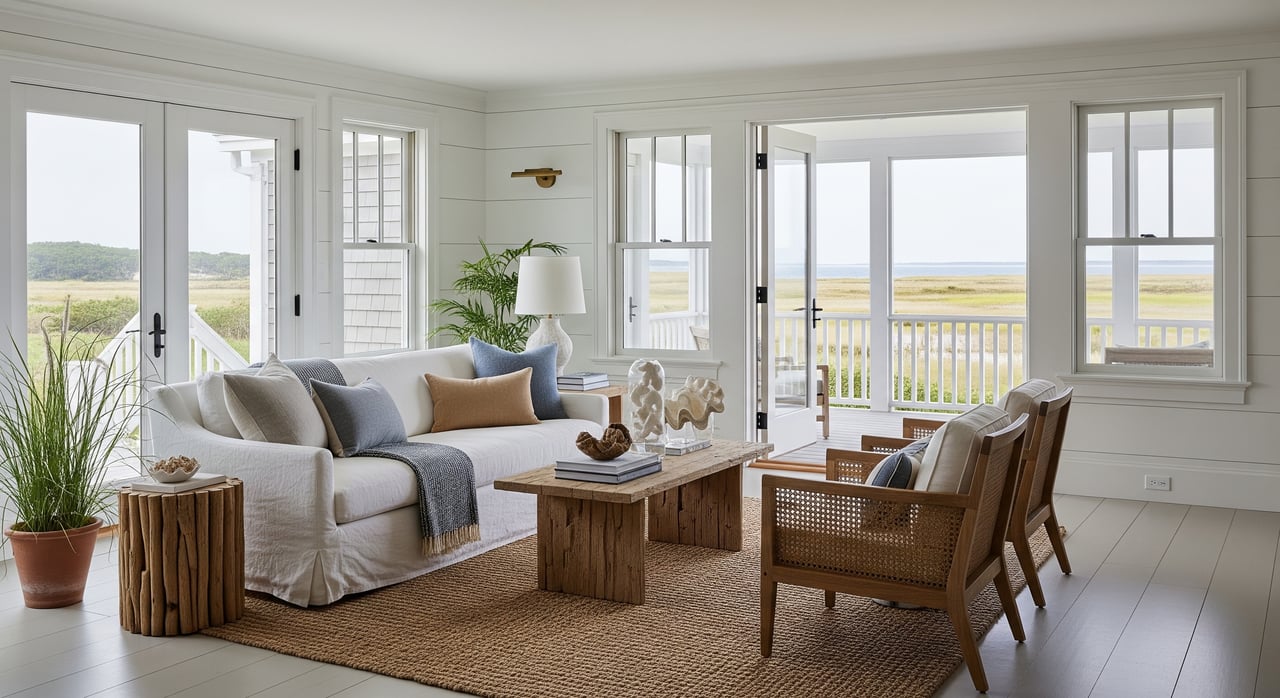
Choose a light, coastal‑neutral palette. Soft whites, warm grays, sandy beiges, and muted sea‑glass blues or greens as accents read bright and timeless. Keep larger surfaces neutral, then add color with pillows, towels, art, and flowers.
Right‑size and simplify furniture
Remove extra pieces to maximize perceived space and clear traffic paths. Arrange seating to highlight the best focal point, whether that is a fireplace or a glimpse of the water. Use appropriately scaled furniture for smaller Cape cottages and larger open rooms, and add smart storage pieces like benches or ottomans.
Light and year‑round comfort
Clean windows and open shades to showcase natural light. Add layered lighting with table lamps and dimmers to show evening ambiance. In cooler months, style throws near a visible heat source to signal comfort. In warmer months, show airflow with fans and open doors to the deck.
Declutter and show storage
Pack away personal photos, hobby collections, and visible paperwork. Clear kitchen counters to a few attractive essentials. If you have kayaks, bikes, or beach chairs, present a neat storage solution so buyers see usable garage and closet space.
Control odor and humidity
Coastal homes can carry odors from mildew, salt, or boats. Tackle causes, not just symptoms. Use ventilation, professional cleaning, and HEPA filtration where needed. If you use scent, keep it light and neutral.
Highlight durable, low‑maintenance finishes
Buyers respond to materials that stand up to salt air. Showcase clean composite decking, corrosion‑resistant hardware, and well‑maintained wood or metal details. If you have original trim or woodwork, stage it with simple decor and note recent refinishing or sealing.
Boost curb appeal and outdoor living
First impressions start at the street. Tidy the driveway, repair walkways, trim hedges, and sweep porches. A few targeted updates can signal that the home is well cared for.
Front entry and porch
Create a welcoming entry with a clean doormat, planters, and a clear path to the door. If space allows, add a small seating area or porch swing to hint at easy summer mornings.
Landscapes that last
Favor native, salt‑tolerant plants that require less water and maintenance. Keep beds neat, refresh mulch, and ensure the lawn or groundcover reads as healthy and simple to manage.
Decks, patios, and paths to the shore
Stage decks or patios with dining and lounge zones that make sense for the space. Keep the grill spotless and add sun protection like an umbrella or pergola. If you have nearby beach or dock access, mark a clear pathway and store gear neatly so the route is obvious without clutter.
Waterfront due diligence
If your property includes shoreline elements, prepare visible documentation. Note the condition of seawalls, riprap, bulkheads, docks, and tidal access. Provide permits and warranties for recent work to build buyer confidence. For permitting guidance, start with the Town of Barnstable and the Massachusetts Office of Coastal Zone Management.
Show coastal readiness and compliance
Flood risk and elevation documents
Many Barnstable properties sit within FEMA flood zones. Expect buyers to ask about flood insurance needs and mitigation. Be ready with your elevation certificate, insurance history, and any mitigation records. You can reference the FEMA Map Service Center for mapping and documentation.
Sea level rise and resiliency
More buyers weigh long‑term resiliency. If you have completed shoreline or site resilience work, present plans, permits, and contractor details. The NOAA Sea Level Rise Viewer and the Massachusetts Office of Coastal Zone Management offer helpful context you can share.
Local permits and short‑term rental rules
Waterfront improvements often require approvals from conservation, planning, or state agencies. Gather permits and final sign‑offs for any recent work. If the property has been a seasonal rental, present rental history and current local rules. The Town of Barnstable is the source for local regulations and processes.
Plan the process
Choose the right local vendors
Lean on pros who understand salt‑air conditions. At a minimum, plan for a stager, professional cleaner, painter, handyman, landscaper, and HVAC specialist. If you suspect moisture issues, add mold or insulation remediation. Local contractors can help you schedule around weather and seasonal demand.
Follow a simple timeline
- Days 0 to 7: Declutter and list repairs or required permits.
- Days 7 to 21: Complete repairs, painting, and landscaping.
- Days 18 to 22: Deep clean and install staging.
- Days 22 to 25: Capture professional photos, floor plan, and a virtual tour.
- Day 25 and beyond: Go live and begin showings.
Adjust for scope, season, and vendor availability. Give yourself weather windows for exterior work and photography.
Photography and media that sell
Hire a photographer with coastal experience to handle glare, water reflections, and sunset or twilight shots. Consider dusk photos for waterfront or well‑lit exteriors. If rooms are empty, accurate virtual staging can help buyers imagine layouts, provided it is clearly disclosed under MLS and brokerage rules. For remote buyers, include an interactive virtual tour and a floor plan for clarity.
Make sure your listing copy highlights what Barnstable buyers value most, such as proximity to beaches and harbors, private beach rights, deeded dock, historic details, and recent system upgrades. Professional staging and curated media feed beautifully into the Compass marketing platform, which supports premium listing presentations and targeted digital outreach to qualified buyers.
Pre‑staging checklist
- Walk the property and list repairs that could deter buyers. Fix what you can or prepare to disclose.
- Deep‑clean inside and out, including windows, behind appliances, siding, and decks.
- Declutter and depersonalize. Box up off‑season items and present organized storage.
- Refresh paint in neutral tones, and touch up trim, thresholds, and high‑touch areas.
- Stage outdoor spaces with clean furniture and modest planters. Store beach gear neatly.
- Replace burnt bulbs and clean fixtures. Confirm HVAC operates properly.
- Assemble documentation: permits, flood insurance history, elevation certificate, and service records.
- Schedule photos for a favorable weather window, and consider twilight images for waterfront.
What buyers will ask
- What is the flood zone and insurance history? Have your elevation certificate and policy records ready, plus any mitigation details.
- How resilient are the shoreline structures and dock? Provide permits, contractor information, and warranties.
- What are annual operational costs for heat, septic, and insurance? Share recent bills or estimates.
- How much storage is available for seasonal gear? Show organized solutions in the garage and closets.
- Has the property been a rental? Share rental history and the latest local rules from the Town of Barnstable.
- When were major systems last serviced or replaced? Offer receipts for roof, HVAC, windows, and electrical.
Ready to list with confidence
Staging for today’s coastal buyers means balancing serene, light‑filled spaces with practical details that prove the home is resilient and easy to maintain. With the right color palette, a clean layout, inviting outdoor living, and organized documentation, you will stand out online and in person. If you want a turnkey approach that blends white‑glove staging, vendor coordination, and premium Compass marketing, connect with Diana Lucivero for a private Cape Cod consultation.
FAQs
What does “coastal‑neutral” staging mean for Barnstable homes?
- It uses soft whites, warm grays, sandy beiges, and subtle sea‑glass accents to create bright, timeless rooms without heavy nautical themes.
How do I prepare flood documentation for Barnstable buyers?
- Gather your elevation certificate, insurance history, and any mitigation records, and reference the FEMA Map Service Center for mapping.
What outdoor features matter most to Cape Cod second‑home buyers?
- Clean decks or patios with clear dining and lounge zones, tidy landscaping, and an obvious, uncluttered path to beach or dock access if applicable.
When is the best season to list a Barnstable property?
- Spring through early fall sees peak activity, but well‑staged homes with strong media can attract serious buyers year‑round.
Is virtual staging acceptable for Barnstable listings?
- Yes, when rooms are empty, as long as it is accurate and disclosed per MLS and brokerage rules, and paired with professional photos.
Where can I verify local permits and shoreline rules in Barnstable?
- Start with the Town of Barnstable and consult the Massachusetts Office of Coastal Zone Management for coastal guidance.